Consistent Water Purity Starts with Deionization
Deionized water removes dissolved mineral ions that cause scaling, corrosion, and contamination in industrial systems. This level of purity is essential for operations that rely on stable water quality to protect equipment and maintain process consistency.
Systems Designed for Your Facility and Water Demand
Deionized water systems are engineered based on required purity levels, flow rates, and operational demands. Western Reserve designs standalone DI systems or DI paired with reverse osmosis to deliver reliable performance and long-term efficiency.
System Performance Benefits Across Industrial Applications
Once properly designed, deionized water supports critical functions such as cooling tower scale reduction, closed-loop system protection, and precision manufacturing in microelectronics and other laboratory environments.
Local Installation, Service, and 24/7 Support in Ohio
To keep systems performing as intended, Western Reserve provides installation, ongoing service, and 24/7 support for deionized water systems across Ohio. This end-to-end approach ensures dependable operation and fast response when uptime matters most.
Understanding Deionized Water for Industrial Use
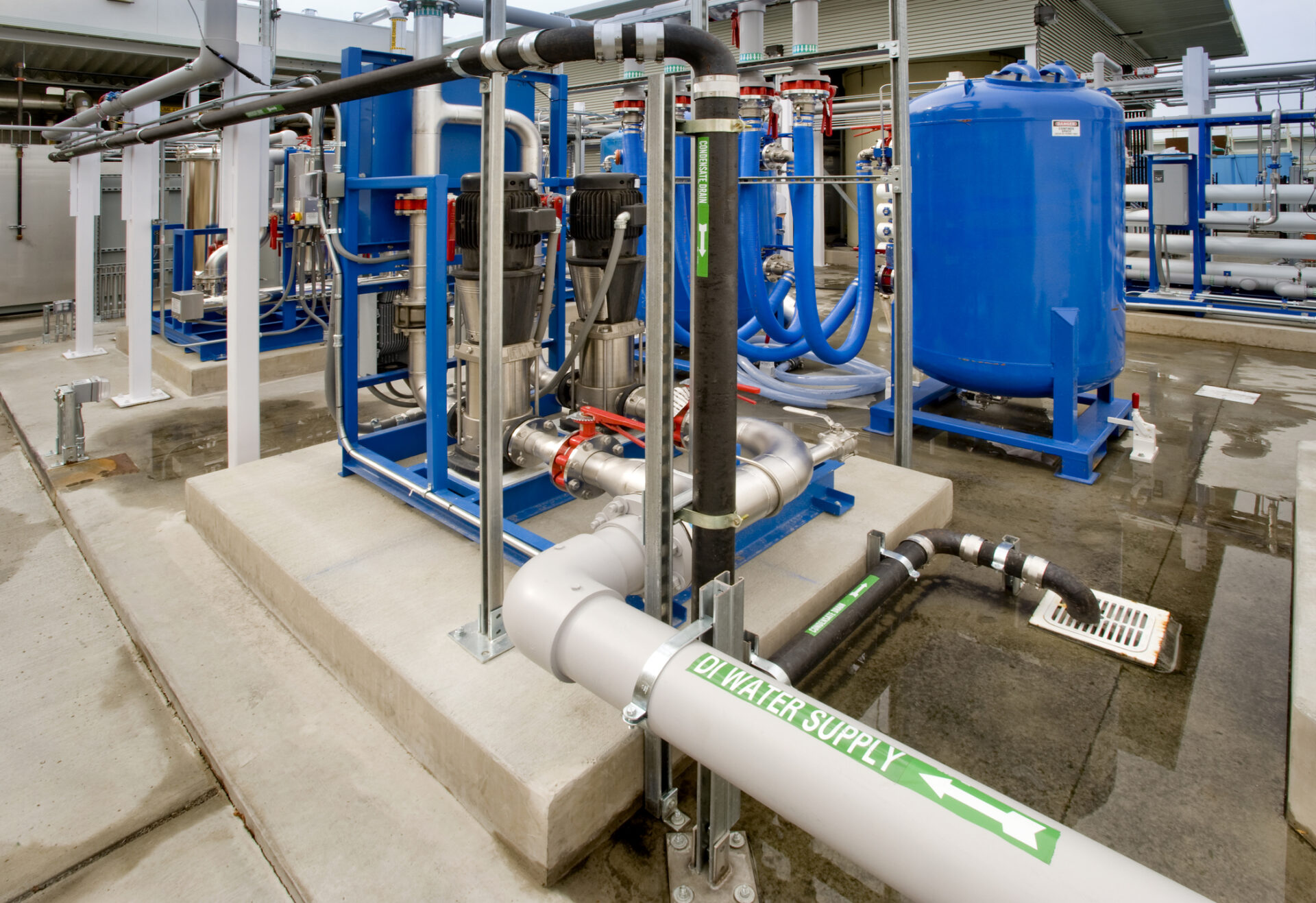
Deionized water is produced by removing dissolved mineral ions such as calcium, magnesium, sodium, chloride, and silica through ion exchange or continuous deionization processes. Unlike standard filtration, deionization targets the ions that cause scaling, corrosion, and conductivity issues in industrial systems. This makes DI water essential for applications where water purity directly affects performance, product quality, or equipment lifespan.
Industrial facilities rely on deionized water to maintain stable operating conditions, reduce unplanned maintenance, and support processes that cannot tolerate mineral variability.
Deionized Water System Design & Integration
Every industrial application has different water quality requirements, flow rates, and operational demands. Deionized water systems can be designed as standalone units or combined with reverse osmosis (RO) to improve efficiency and extend resin life.
RO pretreatment removes the majority of dissolved solids, allowing the DI system to polish the water to ultra-pure levels while reducing operating costs. This integrated approach is commonly used in manufacturing plants, laboratories, and industrial parks that require consistent high-purity water at scale.
Applications: Cooling, Manufacturing, & Precision Processes
Deionized water is widely used to reduce scaling in cooling towers, protect closed-loop systems, and maintain efficiency in heat transfer equipment. By eliminating minerals that form deposits, DI water helps extend equipment life and lower maintenance costs.
In microelectronics manufacturing and laboratory environments, water purity is even more critical. Trace minerals can contaminate products, interfere with chemical processes, or damage sensitive components. Deionized water provides the controlled, low-conductivity water needed to support precision-driven operations.
Installation, Service, & Ongoing Support
Proper installation and maintenance are critical to long-term deionized water system performance. Western Reserve Water provides industrial-grade DI water equipment, professional installation, and ongoing service throughout Ohio.
With 24/7 support available, our team helps industrial facilities minimize downtime, address issues quickly, and maintain consistent water quality. This full-service approach ensures your deionized water system continues to meet operational and compliance requirements over time.
Why Choose Us?
Established Trust
We are a proven partner with two-plus decades of innovation & research
Custom Services
Western Reserve never charges for consultations and will give you a FREE water analysis

Love Local
Professional application engineers in house on staff just a drive away

Industries
Healthcare
We offer water treatment solutions designed for healthcare markets, including meeting ANSI/AAMI ST108/2023 standards.

Automotive
Located squarely on the rust belt, Western Reserve Pure Water has helped countless companies ensure clean discharge, protect workers, and recycle for cooling and production.

Food & Beverage
From extending the life of your most valuable equipment, to making customers happy with great tasting water, coffee & tea, Western Reserve Pure Water systems provide high-quality water to food & beverage companies for a wide variety of applications.

Filtration Systems Designed for ST108 Compliance
Western Reserve’s filtration systems are built to help healthcare facilities meet the demanding water quality standards of ST108. Designed for reliability and performance, these systems make sure your water is safe, clean, and ready for everything from medical device reprocessing to everyday use.
End-To-End Membrane Cleaning – Available Nationwide!
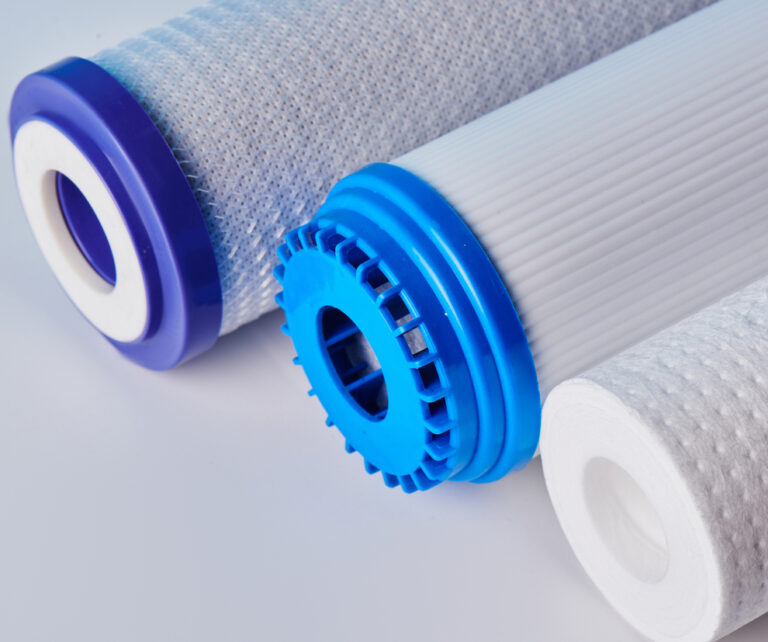
Save your time, money and effort by having Western Reserve Pure Water clean your existing membrane. We offer short turnaround time and loaners if needed. Shipping is an easy process, and we offer service and maintenance plans. We have customers anywhere across the U.S.
Deionized Water FAQs
Deionized (DI) water is water that has had almost all of its mineral ions, such as calcium, magnesium, and sodium, removed through specialized ion exchange processes. Unlike distilled water, which is purified through boiling and condensation, or filtered water, which removes particulates and some contaminants, DI water is specifically engineered for ultra-pure applications where mineral content must be minimized. This makes it ideal for industries like microelectronics manufacturing, laboratory use, and precision cooling systems.
A reliable deionized water system consistently produces water with low conductivity and high purity while minimizing downtime. Look for systems that feature high-quality resins, real-time monitoring, robust filtration, and easy maintenance access. Industrial providers in Ohio often highlight 24/7 service and support, which is crucial for uninterrupted operations in factories, labs, and industrial parks. Reliability also comes from certifications, warranty coverage, and proven performance in similar industrial applications.
Yes. Combining reverse osmosis (RO) with deionization creates a two-stage water purification system that removes both dissolved solids and ions for ultra-pure water. RO systems first remove 90–99% of total dissolved solids, and DI systems polish the water to near-zero ion content. This combination is particularly effective for microelectronics manufacturing, laboratory applications, and industrial cooling systems, providing water that is clean enough to prevent contamination or scaling.
Deionized water reduces scaling because it contains minimal minerals like calcium and magnesium that typically form scale deposits. Using DI water in cooling towers improves heat transfer efficiency, reduces maintenance costs, and extends the lifespan of equipment. Industrial parks and manufacturing facilities often rely on DI water services specifically for scaling control, ensuring that cooling systems remain reliable and efficient even under heavy, continuous operation.
Industrial-grade deionized water systems are available from specialized water treatment providers throughout Ohio. Many providers, including Western Reserve Pure Water, offer full-service solutions that include equipment purchase, custom system design, installation, and ongoing maintenance. Look for suppliers that serve industrial parks, manufacturing facilities, and microelectronics operations, as they often provide turnkey solutions and 24/7 support for uninterrupted operation.
- Continuous deionization (CDI) systems provide a steady flow of ultra-pure water, ideal for high-volume industrial applications like cooling towers, microelectronics, and laboratories.
- Batch deionization systems operate in cycles, producing water in discrete batches, which is suitable for smaller-scale or periodic use.
CDI systems generally offer higher efficiency, lower labor requirements, and consistent water quality, while batch systems are less expensive upfront but require more monitoring. Choosing the right type depends on production volume, purity requirements, and operational demands.
When comparing DI water systems, consider three main factors:
- Cost: Include not only initial purchase price but also installation, maintenance, and resin replacement costs.
- Capacity: Evaluate how much water the system can produce per hour or day, ensuring it meets your facility’s demand.
- Efficiency: Look for systems that minimize waste, maximize resin life, and reduce energy consumption. Combining DI with RO can also improve efficiency and water quality, especially in industrial parks or manufacturing facilities requiring consistent, high-purity water.
Many industrial DI water providers, including Western Reserve, offer 24/7 support, including troubleshooting, emergency repairs, and routine maintenance. This ensures that critical operations in microelectronics, laboratories, or cooling towers aren’t interrupted by water system downtime. Having access to around-the-clock technical assistance reduces costly production delays, extends system lifespan, and ensures compliance with purity standards.
In precision manufacturing, even trace minerals or ions in water can damage sensitive equipment, contaminate products, or interfere with chemical reactions. Deionized water provides ultra-pure water that prevents scaling, corrosion, and contamination. This is especially crucial for microelectronics fabrication, laboratory experiments, and pharmaceutical processes, where water purity directly impacts quality and yield.
Yes. By removing ions like calcium, magnesium, and iron, DI water reduces the potential for mineral deposits and corrosion in pipes, heat exchangers, and cooling systems. Using deionized water helps maintain system efficiency, reduce maintenance costs, and prolong equipment life, making it a key solution for industrial parks, manufacturing facilities, and cooling tower operations.
Like Western Reserve, look for providers that comply with ANSI/NSF standards, ISO 9001 quality management, and local environmental regulations. Certifications ensure that water systems meet safety, performance, and purity standards. For industries like microelectronics or pharmaceuticals, additional compliance with ASTM or USP standards may be required. Choosing certified providers ensures reliable, high-quality water and regulatory compliance.
Why Choose Western Reserve Pure Water + 
Western Reserve Pure water has serviced Northern Ohio and surrounding areas for more than 20 years. Our recent partnership with Culligan Water gives us the technology and research of a global corporation at our back. At our heart – we’re still your mom and pop shop here to serve you locally. Call us today to find out how we can help your business save money, grow, and sustain.